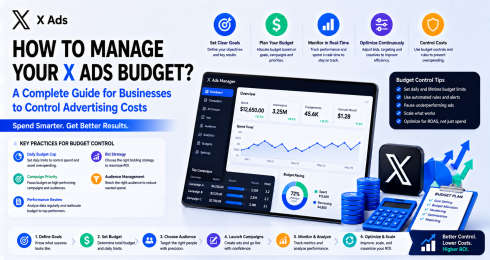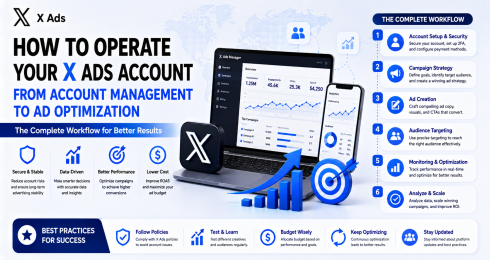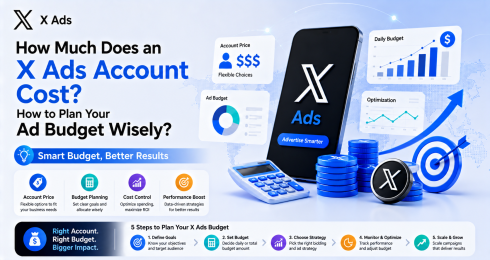
What is the purchase price of a Twitter ad account? How can businesses effectively control advertising costs?
When preparing to launch overseas social media advertising, many companies search for "Twitter ad account purchase price".
In reality, the cost of an advertising account cannot be measured by a single fixed number. Different account services, usage needs, payment methods, operational scale, and supporting services can all lead to differences in the final cost.
For businesses, the more important issue is not finding the absolute lowest price, but rather determining whether the overall investment in their accounts aligns with their advertising budget.
Why are there differences in Twitter ad account prices?
There may be significant cost differences between different advertising accounts, mainly due to factors such as account type, service content, usage conditions, and after-sales support.
For example, if a business needs to operate advertising long-term, then account management and after-sales service may be more important than the initial purchase cost.
If it's just a short-term test, then flexibility and overall testing costs should be the main considerations.
II. Purchasing an account and advertising budget are two different concepts.
Businesses should note that the cost of purchasing an advertising account is not the same as the subsequent advertising budget.
The overall advertising cost can be simply understood as:
Account-related costs + advertising budget + creative costs + personnel operation costs + data analysis costs.
Therefore, when setting an overseas advertising budget, you should not only calculate the account's own costs.
III. How can companies develop reasonable budgets?
It is recommended that companies first determine their overall marketing objectives.
For example:
Brand exposure, website visits, product sales, app downloads, and potential customer acquisition.
Different marketing objectives correspond to different budget sizes.
If a business is using X Ads for the first time, it can conduct a small-scale test first, use real data to determine the target audience, creative materials and ad format, and then gradually adjust the budget.
4. Don't sacrifice user experience for a low price.
While low prices can reduce initial investment, problems such as unclear permissions, inconvenient payment, and management difficulties may increase the company's operating costs.
Therefore, companies should adopt a "comprehensive cost" approach when comparing prices.
For example:
Is the account price reasonable?
Does the service include the necessary support?
Are the permissions clearly defined?
Is payment convenient?
What are the subsequent operating costs?
These questions are more meaningful than simply comparing prices.
V. How to reduce the long-term cost of X advertising?
Lowering advertising costs does not simply mean reducing the budget.
A more effective approach is to improve the utilization rate of advertising budgets.
Businesses can optimize in the following aspects:
Optimize ad creatives
Test different titles, images, videos, and ad copy.
Optimize target audience
Data analysis helps us understand which audiences are more likely to engage and convert.
Optimize landing page
Users brought in by advertisements ultimately need to visit the website or product page, so the page experience is very important.
Controlling ineffective advertising expenditures
Promptly pause ad groups that have not met their targets for an extended period and concentrate the budget on the better-performing ads.
VI. How to judge the cost-effectiveness before purchasing?
A simple evaluation form can be created:
Account Suitability: High/Medium/Low
Permission completeness: High/Medium/Low
Payment Convenience: High/Medium/Low
Service capacity: High/Medium/Low
Long-term operating costs: High/Medium/Low
By using a comprehensive evaluation method, rather than just looking at the price, businesses can be helped to choose a more suitable solution.
Summarize
The price of a Twitter ad account is only one part of a company's overseas advertising costs.
What really needs to be focused on is the relationship between account costs, advertising budgets, and long-term operating costs.
For businesses, a reasonable budget plan should be based on business objectives, target markets, advertising test results, and conversion data.
Latest blog